Investing in
luxury sheets
is about more than elegant design and style; it is investing in your comfort and sleep. With proper care, that investment will pay off nightly for years to come. The finest percale sheets and sateen sheets are typically woven from quality long staple cotton fabric. They are true heirloom bed linens; made to last a lifetime, growing softer and more beautifully comfortable with every washing. That kind of lasting quality begins with knowing how to care for your luxury bedding properly. The experts at Fine Linen and Bath are here to take the guesswork out of washing and caring for your sheets. Follow these guidelines and spend less time wondering and more time enjoying the beautiful bed linen you’ve chosen for your home.
Percale and Sateen Sheets: What You Have Matters
This guide is written mainly for
percale sheets and sateen sheets — the two most popular luxury cotton sheet weaves — as well as their matching pillowcases, pillow shams, and flat sheets. Both percale and sateen are woven from high-quality long staple cotton, including Egyptian cotton, Supima cotton, and organic cotton, and share many of the same care requirements. Whether you are investing in your first luxury sheet set or adding to a carefully curated bedroom that reflects your personal home decor style, this guide will help you care for your sheets with confidence. (See our FAQ below for a full explanation of the difference between percale and sateen. You can also modify these instructions for different weaves, such as jacquard, and plant-based fabrics such as linen, bamboo, and modal.)
How to Wash Luxury Sheets, Step by Step
Step 1: The First Wash — Start Here
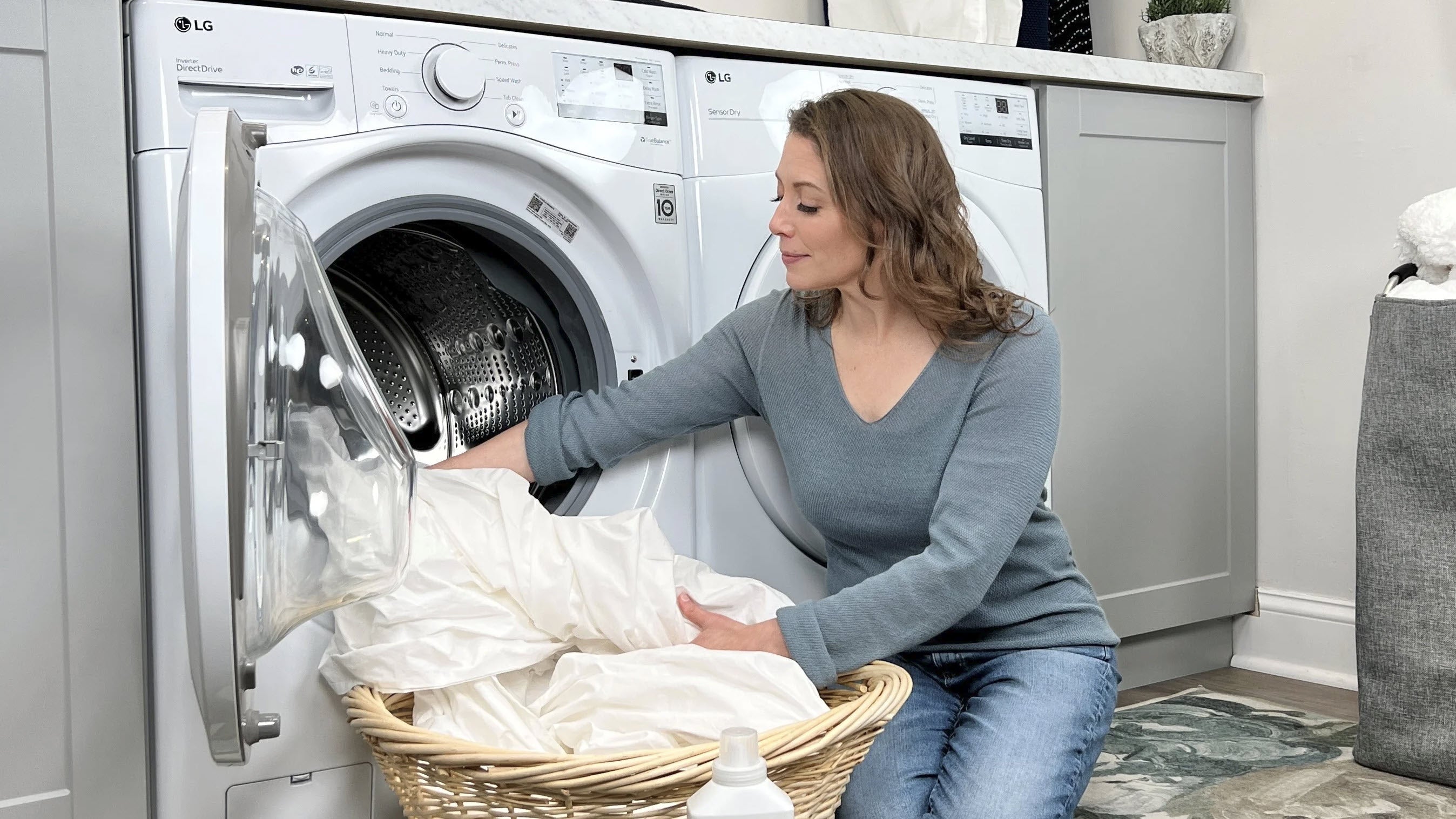
When you unbox your new sheets, always read and follow the care label before doing anything else. Wash new sheets before using them for the first time; this will remove any finishing that was used in the manufacturing process and set the threads. Carefully remove any tags with scissors; never pull them as this can snag delicate fabric. Fully unfold all items — including your fitted sheet and flat sheet — before placing them in the machine; set the cycle to include a cold pre-soak; and use a minimal amount of liquid laundry detergent. Either line dry or tumble dry on low heat for this first wash. Keep in mind that natural cotton fibers will wrinkle (percale weave more so than sateen), and ironing may be required depending on your preference.
Step 2: Sort Your Sheets Before Washing
For regular laundering, separate your bed sheets and bed linens into light and dark colors before loading the washing machine. Wash matching sheet sets — fitted sheet, flat sheet, and pillowcases — together, as each piece should be cared for consistently to maintain color, brightness, and even wear. This is especially important for brightly colored or patterned cotton sheets, where inconsistent washing can cause uneven fading over time. If your bed sheet set includes a duvet cover or pillow shams, wash those at least every other time you wash the sheets.
Never launder your luxury sheets with bath towels, mattress pads, or anything with buttons, zippers, rivets, or embellishments; all of these can cause abrasion and damage to delicate fabric. Do not overload the washing machine; sheets need room to move freely in order to get truly clean and properly rinsed. This applies to duvet covers as well; a duvet cover takes up considerable space in the machine and is best washed separately or in a smaller load. Sheets or pillowcases with delicate details or embroidery can be placed inside a
fine mesh laundry bag to protect them from damage during the wash cycle.
Step 3: Choose the Right Detergent
Selecting the right laundry detergent is the most important decision you can make for your luxury sheets. We recommend
Heritage Park All-Purpose Laundry Detergent, a concentrated, pH-neutral, liquid laundry detergent made with natural, plant-based ingredients. Rather than using harsh chemicals, Heritage Park All-Purpose cleans with a proprietary blend of enzymes that break down and remove body oils, sweat, and stains without damaging fabric, It is an excellent choice for washing sheets made from cotton, percale, sateen, bamboo, and cotton blends (silk sheets should be laundered with an
enzyme-free detergent). The fragrance-free formula is lab-certified hypoallergenic and pediatrician- and dermatologist-tested (important considerations because your bed linen comes in direct contact with your skin every night). If you prefer a light fragrance, Heritage Park All-Purpose Laundry Detergent comes in Lavender Mist, Shore Breeze, and Spring Magnolia scents.
Step 4: Measure Properly
Use the recommended amount of detergent and resist the urge to add more. Using too much detergent–even a gentle detergent like Heritage Park—can lead to incomplete rinsing. Never pour detergent directly onto your fabric; add it to the water as the machine fills, or dilute with water before adding your sheets.
Never use chlorine bleach on your luxury sheets. It weakens cotton fibers, causes white sheets to yellow over time, and fades colored sheets irreparably. You should also skip both fabric softener and dryer sheets; these products coat fabric and weaken natural fibers. This reduces the exceptional softness and breathability that make fine linen worth the investment. If your sheets need brightening, oxygen-based bleach is a safe alternative (as long as the care label permits).
Step 5: Pretreat Stains Before Washing
Pretreat any stains on your sheets before placing them in the washing machine. Most stains on bed sheets are protein-based — body oils, blood, sweat, and similar — and respond very well to enzyme detergent. Apply a small amount of Heritage Park All-Purpose Laundry Detergent directly to the stain and gently work it in with your fingers, or make a 1:1 solution of detergent and water in a spray bottle and apply it to the stained area. Allow the pretreatment to sit for at least 15 minutes before washing. For stubborn stains on your best luxury sheets, you can also presoak the item in a diluted enzyme detergent solution before running the wash cycle.
Step 6: Wash on a Gentle Cycle in Warm Water
Wash your luxury sheets on a gentle or permanent-press cycle in warm water with a cold-water rinse. Warm water is more effective at cleaning than cold water and better activates the laundry enzymes in your detergent for maximum stain removal, while the cold rinse helps preserve fiber integrity and reduce shrinkage. For deeply colored bed sheets, err toward cool water to protect the integrity of the dye. Reserve hot water for occasions when a more thorough clean or disinfecting is needed (for example, if someone in your household has been ill or if you are washing sheets that have not been laundered in a while and may harbor dust mites).
Step 7: Dry on Low Heat
When the wash cycle is complete, remove your sheets promptly and give them a gentle shake to smooth the fabric and remove any twisting that may have occurred in the machine. Whenever possible, line dry your cotton sheets in soft outdoor sunlight; this is the gentlest drying method and the sun provides natural brightening. If like most people you are using the dryer, tumble dry on low heat only. Excessive heat damages cotton fibers, causes shrinkage, and shortens the life of even the finest luxury bedding essentials.
To naturally soften bedding, use
pure wool dryer balls in place of dryer sheets. Along with softening fabric, wool dryer balls reduce drying time and minimize static without leaving any coating on your delicate fabric. Consider drying your fitted sheet and duvet covers separately from pillowcases and pillow shams, as these smaller items tend to ball up inside larger pieces and may not dry thoroughly in a combined load. Duvet covers should be laundered inside out and dried with plenty of room to circulate.
Don’t over dry your sheets. Remove them while they are very slightly damp and allow them to finish air drying or press with a steam iron while still damp (see below).
Step 8: Iron with Care (If Desired)
It is unavoidable that natural cotton fibers will, to some degree, wrinkle (percale more so than sateen which is a bit softer and naturally drapey). Some think that a bit of wrinkling is part of the natural beauty of cotton, while others like the crisp clean lines of smooth bedding. If you decide to iron your bedding, follow these guidelines:
- Iron while sheets are still slightly damp for the best results.
- Use a steam iron on the setting recommended for your specific fabric.
- Sateen sheets should always be ironed on the reverse side to protect the sheen of the fabric surface.
- Embroidered sheets should also be ironed on the reverse side, using a white terry towel underneath until smooth but not completely dry.
- Delicate lace detailing should be ironed beneath a press cloth.
If you prefer to skip ironing entirely, make up the bed immediately after removing sheets from the dryer to minimize wrinkles as the fabric finishes drying. Alternatively, you can iron only the pillow cases from your sheet set since they are all that will show.
Step 9: Store Your Sheets Properly
Once your sheets are clean and fully dry, fold them neatly and store them in a cool, dry linen cabinet away from direct light and moisture. Avoid storing bed linens in plastic bags or airtight containers; this can trap moisture and lead to mildew or a musty smell. A helpful tip: fold and store your sheet set inside one of its own cotton pillowcases to keep the set together and protected from dust. Rotate your sheet sets regularly so all sets wear evenly over time; this is one of the simplest bedding essentials habits you can build to extend the life of your fine linen investment.
"Beautiful luxury sheets are one of the most personal investments you can make in your home — you spend a third of your life in them. Knowing how to wash sheets properly from the very first time is what keeps that investment paying off year after year. The right detergent, gentle drying, and a little attention to the care label are all it really takes to keep your sheet sets feeling as beautiful as the day you bought them — and of course, washing them regularly is simply good hygiene."
— Helena Hendricks, Associate Brand Manager, Fine Linen and Bath
With the right routine in place, your luxury sheets will reward you with lasting softness, comfort, and beauty. If you have questions about caring for your bed linens or require assistance finding the perfect sheet set, the design team at Fine Linen and Bath is here to help.